
Galvanized chain link
The traditional silver-gray option. Zinc-coated steel is commonly selected for working areas, utility spaces, larger fence lines, and projects where straightforward function and cost matter most.
Residential + Commercial / Lafayette, Louisiana
Galvanized and black-coated chain-link fencing for yards, dogs, equipment, businesses, and properties that need a practical boundary.
Request an Estimate01 / Why Chain Link
Straightforward + Adaptable
Chain link works because it can cover a long fence line, preserve visibility, and be configured around the actual demands of the property.
It is used for backyards, dog areas, side yards, storage spaces, commercial properties, schools, recreational areas, and utility enclosures. The open woven fabric follows ordinary ground contours and creates containment without turning the fence into a solid wall.
It is not the right answer when privacy or a decorative architectural statement is the main goal. It is a strong option when function, access, visibility, and budget carry more weight.
02 / Finish Options
Silver or Black
Both options use the familiar woven chain-link system. The finish changes how the fence looks and how its metal is protected.
The traditional silver-gray option. Zinc-coated steel is commonly selected for working areas, utility spaces, larger fence lines, and projects where straightforward function and cost matter most.
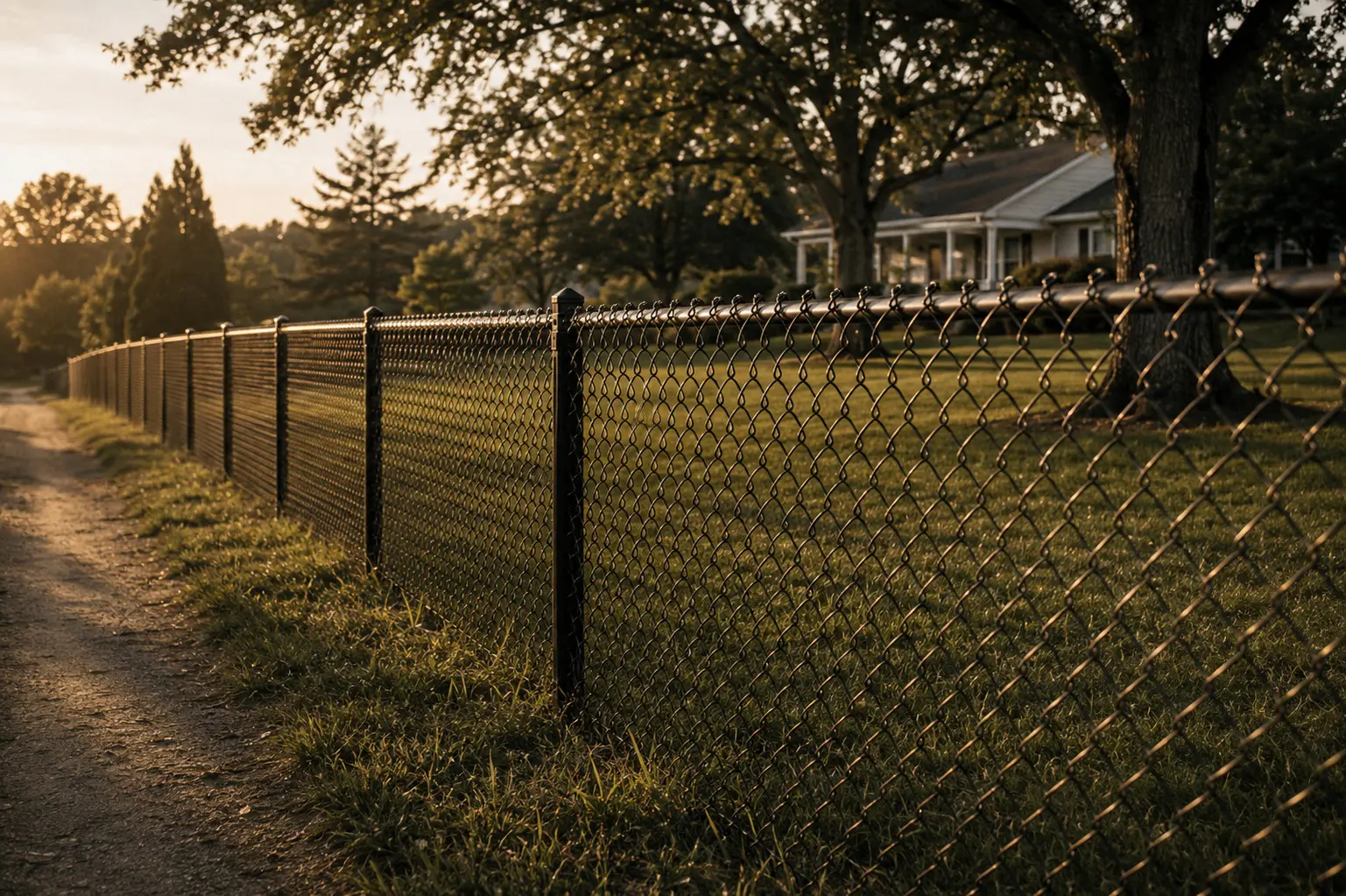
A dark polymer coating gives the fabric a quieter appearance against grass and landscaping. Matching coated framework and fittings create a more finished residential or commercial installation.
03 / Fence Specifications
A heavier fence is not created by changing one component. Fabric, framework, posts, gates, and installation method have to work together.
Lower gauge numbers indicate thicker wire. The expected traffic, containment, and security needs help determine how heavy the fabric should be.
The diamond opening affects weight, cost, visibility, and how difficult the fabric is to climb or manipulate. Smaller mesh generally creates a denser system.
Post diameter, wall thickness, spacing, terminal posts, top rail, bracing, and fittings determine how the fence carries tension and handles use.
The right height depends on whether the fence marks a boundary, contains a dog, protects equipment, or controls access to a commercial property.
04 / Residential or Commercial
Residential and commercial chain link may look similar from the road, but the working demands can be very different.
Residential
Residential planning begins with who or what the fence needs to contain, how the family uses the yard, and where mowers, trailers, trash cans, or vehicles need to pass. Height, bottom tension, gate width, and latch placement matter as much as the fence line.
Commercial
Commercial work may require taller fabric, heavier framework, stronger gate posts, smaller mesh, more substantial fittings, or larger vehicle access. The fence should be specified around traffic, assets, operating needs, and applicable project requirements.
05 / Gates + Access
Plan the Opening Early
A gate is the moving, frequently used part of the fence. Its opening, posts, hardware, and clearance deserve their own plan.
A pedestrian gate may be enough for a dog area or side yard. Lawn equipment, trailers, service vehicles, dumpsters, and commercial traffic can require wider single or double gates and more substantial support. Grade and drainage at the opening also affect how the gate clears the ground and operates over time.
We establish the access needs before finalizing the fence so the finished layout does not create a daily inconvenience.
06 / Privacy + Screening
Standard chain link provides visibility—not privacy.
Slats and screening can reduce the view through the mesh, but they also catch more wind and add load to the fabric, posts, rails, and footings. A screen should not be treated as a cosmetic afterthought. If strong privacy is the goal from the beginning, a solid privacy fence may be the more appropriate system.
07 / Installation Planning
Property boundaries, slopes, drainage, trees, structures, utilities, and surface changes shape the layout.
Terminal and gate posts carry greater loads than ordinary line posts and need to be sized and set for that work.
Properly stretched fabric, secured edges, and a controlled bottom line keep the fence from looking loose or performing poorly.
Gates, latches, fittings, clearances, and the completed fence line are reviewed at the end of the installation.
08 / Where We Work
Based in Sunset, Louisiana
Southland installs residential and commercial chain-link fencing in Lafayette and throughout the surrounding Acadiana communities.
We work in Youngsville, Broussard, Scott, Carencro, Sunset, Opelousas, Breaux Bridge, and nearby South Louisiana properties. Include the property address and intended use with your estimate request so we can review the location and scope.
09 / Common Questions
Galvanized chain link has the familiar silver finish created by a protective zinc coating. Black chain link adds a dark polymer coating that softens the industrial appearance and helps the fence recede against landscaping. The right option depends on the property, appearance, and project requirements.
Height should follow the job the fence needs to do. Shorter fences can define yards and gardens, while taller systems are often selected for dogs, commercial sites, equipment areas, or stronger access control. Local rules and property conditions may also affect the choice.
Gauge describes wire thickness, but the numbering works backward: a lower gauge number means a thicker, heavier wire. Wire gauge should be selected together with the height, mesh size, posts, rails, gates, and expected use—not as a stand-alone feature.
Standard chain link is open and does not provide privacy. Slats or screening can reduce visibility, but they also add weight and wind load to the fence. Those effects need to be considered before adding screening.
Yes, when the height, mesh, bottom restraint, gates, and hardware are appropriate for the dog and property. Larger, active, jumping, or digging dogs may require a taller or heavier configuration and additional attention along the bottom.
Yes. Pedestrian, double-swing, and larger access gates can be included depending on the opening and how the property is used. Gate width, posts, hinges, latch, clearance, and daily traffic should be planned with the fence.
Send the property address, approximate fence line, intended use, preferred finish, height if known, and the number and approximate width of any gates. We will follow up to discuss the scope and next steps.
Ready When You Are
Tell us where the property is, what the fence needs to do, your preferred finish, and the access your gates need to provide.
Request an Estimate